Hey All – Just in case you could not guess by the lack of activity here. Loosebolts had moved off the official wordpress platform some time ago. You can follow this link to the new location.
Thanks!
\Mm
Spooky Action Issues Ahead for the Just-out-of-Reachables
I had an interesting conversation this week with a good friend of mine who works at one of the big Internet companies. We hadn’t talked in a good while so it turned out to be a wide ranging conversation that meandered back and forth from our mutual experiences building globally scaled technology platforms, past companies, current companies, to the possibility of getting together soon for beers when we happened to be in the same part of the world at the same time. It ultimately landed on the topic of EMV and some of the unique challenges in the Payments space. While the questions were initially focused on consumer experiences, it quickly devolved (as they always do with my friends) into a technology and business conversation.
One of my most substantial learnings moving from ‘Big Internet’ to the Payments and Fintech space is that the Internet guys do not have a lock on scale or its challenges. I used to live in that world of hubris where all the tough and hard challenges were exclusively found, created, and solved within a hundred miles of the Pacific Ocean shoreline. That is not to say that they do not solve those things, its just not as exclusive as they believe. Reality has a way of kicking you in the pants. I know it did mine.
Whether it be geo-diversity in infrastructure or software platforms the need for global reach and footprint balanced against localization is not only important in an ever-shrinking world, its mandatory. This is especially true in Fintech. One does not get to focus singly on Business to Business Scenarios or Business to Consumer scenarios separately, you have to focus on both. Throw in country by country regulatory requirements around privacy, commerce, data access, taxation, industry and customer oversight and governance and you end up with a giant three dimensional jigsaw puzzle of international complexity. All of that is before you get to really hard stuff… interfacing with the customers and merchants. Now our jigsaw puzzle has reached the 4th dimension and I am pretty sure quantum mechanics and spooky action at a distance come into play in there somewhere.
‘Hey Mike, Why isn’t everyone moved over to the Chip and Pin (or EMV) in the United States yet?’. The inference was that somehow the Banks, companies like mine, and others were not doing enough to protect the consumer. To really answer his question I had to first talk about the complexity of the Point of Sale and merchant eco-system that exists between his purchase of a slice of pizza and its ultimate funds settlement to his bank. It may seem straightforward to folks who do not understand all of the pieces, but it can actually be pretty complex.
The ends are pretty simple –on one side you have the consumer interfacing with the merchant. On the other is the bank or credit card provider where the funds are ultimately provided. Most people conceptually understand those two parts. However the parts in the middle get a little tangled up.
The merchant may get its payments servicing from any one of a different number of types of businesses. The first way would be through a direct payment processor like FirstData, a second could be through an independent sales organization (or ISO) who can have relationships with a single or multiple payment processors, a third way could be through merchant’s banking partner directly who in turn has relationships with a payment processor, another way would be through an Integrated Software Vendor (or ISV) who adds additional software capabilities before it hits a payment processor. In these examples the ISO, ISV, and Banking partner still interface at some point with a payment processor before connecting to the Credit Card Associations (or schemes ) like American Express, Discover, Mastercard, or Visa, and then ultimately the bank. The path any particular transaction could take could cross many different providers. Depending on the route and merchant up, there could be some significant distance between the consumer end and the settlement end on the bank. Additionally the question of who owns the full transaction path gets fuzzy as all of these players intersect with each other in the transaction flow.
In trying to answer the question about EMV adoption the solution could be complex. In many cases the ISO and the ISV may have additional software in the mix that is not EMV compliant and the merchant must wait for their service to be compliant before they can adopt. In many cases the point of sale device they use may not be EMV compliant either and they are waiting on their business partner to provide one that is. Then of course there is normal human apathy or a lack of desire to spend the money to upgrade on the merchants behalf. All of these things play a part.
While many focus on the added security for the consumer with the EMV cards, the impact on the merchant is slightly different. It reality represents a shift in liability away from the banks and credit card companies to the merchants themselves. If a merchant does not adopt the technology, any fraud related activity from their store will be their responsibility and will need to take the loss rather than the bank. Some merchants feel like they are willing to take that risk given their customer and product mix. The last category are merchants, who like most consumers, don’t understand the complexity nor do they want to and generally ignore it.
While great strides have been made to drive EMV adoption, we are sitting woefully short of the adoption to those folks listed in the categories above. I call these folks the ‘Just-Out-Of-Reachables’ and they have been a hard nut to crack for the industry at large. It has tried for multiple years to prepare, communicate and execute for this. To be fair these interactions have not stopped commerce, and have only put the individual merchants at risk for fraud for the most part.
There is however a potentially more fatal issue on the horizon that will stop transactions and could directly impact the merchants and consumers alike. While somewhat technical in nature it has to do with a move from SHA1 to SHA2 hash certificates. Many solutions in the marketplace were initially written with the SHA1 security specifications and dependencies. Over time that certificate has proven to be less secure and the industry at large has been told to migrate to SHA2 certificates. While many of the big players have made the jump from a technology perspective to the SHA2 standard, the issue significantly overlaps and shares the same challenges with reaching out and solving for the ‘Just-Out-Of-Reachables’. Only in this case, once the SHA1 certificates expire, their point of sale systems will stop working altogether. Working with the browser forums has resulted in some firms getting small extensions to SHA1 certificate expirations, but it has not been uniformly consistent with some firms getting differing lengths of extensions, and some none at all. Its a real issue for the industry at large and we should start to see these impacts over the next few months.
It will be interesting to see how this plays out especially given the potential public exposure of it.
\Mm
Prediction: Digital Wallets (#Apple Pay,#SamsungPay,#GooglePay) Find their KillerApp at the Gas Pumps

I was recently in a checkout line at a local retailer politely waiting my turn when a very common experience occurred in front of me. Let me set the scene:
The cashier begins scanning the grocery items of the person in front of me. The customer walks up to the card reader on the point of sale device and swipes the card. It doesn’t work.
Cashier: Is that a chip card?
Customer: Yes. Why isn’t it working?
Cashier: You have to wait for me to finish ringing everything up when up have the chip card.
Customer: I liked it better when I could just swipe. It sped things up a lot.
Cashier: I know it.
(The cashier continues scanning the rest of the groceries until all were accounted for).
Cashier: That will be $86.16
Customer: Ok (puts card in the reader).
Cashier: Its not in all the way. Push it until it clicks.
Customer: Ugh.. Ok. (pushes it in a little more).
Customer: Ok it says Dont Remove your card.
Cashier: Ok we just have to wait a few.
Customer: Why would they replace something that was so fast before with something so terribly slow.
(Transaction clears)
Cashier: Ok all set. Go ahead and remove your card.
Customer: I hate these new cards.
Cashier: I know it.
Lets face it. The customer experience around the move in the United States to EMV or Chip & Pin thus far has been ugly for the average American consumer. We are a society of near instant gratification. We have come to expect it. My friends in Europe and abroad have been used to this type of interaction on payments for some time but here in the States, the SWIPE is firmly encoded into muscle memory. Its natural. Its unnatural to do anything else.
At some level most Americans have a passing understanding that the EMV card is more secure and prevents fraud. That’s about where it ends. In another interaction I witnessed a man making a purchase exclaimed, “I hate this Insert card thing. I know its more secure, but that’s my banks problem”.
In either case I was not about to go into the intricacies of the shift of liability for fraud from the banking institutions to the merchant. That ultimately it was the grocery store (and not the banks) that would need to worry about the fraud and security if they did not upgrade their point of sale devices to EMV. I just wanted to buy a gallon of milk, six ears of corn on the cob, and a few packets of gravy dust. Just how my wife turns that dust into delicious gravy is still a mystery but that is not important here.
For those of you who do not know what an EMV card is, the Wikipedia entry defines it thusly:
EMV is a technical standard for smart payment cards and for payment terminals and automated teller machines that can accept them. EMV cards are smart cards (also called chip cards or IC cards) that store their data on integrated circuits in addition to magnetic stripes (for backward compatibility). These include cards that must be physically inserted (or “dipped”) into a reader and contactless cards that can be read over a short distance using radio-frequency identification (RFID) technology. Payment cards that comply with the EMV standard are often called Chip and PIN or Chip and Signature cards, depending on the authentication methods employed by the card issuer.
EMV stands for Europay, MasterCard, and Visa, the three companies that originally created the standard.
The shift in the underlying technology is definitely a big one. Its all the stuff I care about as a technology professional. Its the stuff that the consumer never sees or has an inkling is going on. I get interested and excited in the fact that the packet payload of a transaction increased significantly going from Non-EMV to EMV even moreso If there is encryption or other security products in the mix on the transaction, increasing the packet size larger. I love the challenge that those larger packets create on the global payment network, the network sizing and global capacity planning. I am enthralled by the changes in how those transactions are then routed, checked and authorized. All of these things could / can/ and do contribute to the transaction time per “dip”. It is these technological equivalents of the arcane black arts, wizardry, rain-dances, and human sacrifices performed in the back-end that capture my attention. For most however, it all nets out to “Why does this take so long?”
It is in that non-technical, physical, customer service experience that the value of Digital Wallets will finally begin to experience its time of greatest adoption.
Digital Wallets like Apple Pay, Samsung Pay, Google Pay, and other “x-pay” technologies have been out there for awhile. Their ultimate adoption in the marketplace hasn’t really been all that significant (although it is growing slowly). Mostly because it has not really hit mainstream yet. Sure the technology geeks like me have them installed. So do the Hipsters who want to show their “tech-cred” by getting their No Whip, Half-calf, skinny lattes without putting down their phones and retrieving their wallets (which coincidently are almost always carefully hidden within their perfectly groomed beards like Captain Caveman).
To hit the mainstream, something is going to have to agitate the average consumer so much that it starts to drive the change. I believe that change is on the horizon. In fact, I may even know the date. October 1, 2017. That date is the deadline where all gas pumps in the United States must become EMV compliant. There is a good chance the petrol industry will seek a delay (after all – can you imagine the scale of the issue of replacing every gas pump in the country?) . They were given two extra years to make the conversion but it will likely be a logistical nightmare compounded by the fact that many gas stations are not owned by the gas companies at all, but are franchises owned by local business people.
My personal prediction is that most folks will not want to go through the Stick and Click method at the pumps. Swiping has become muscle memory for just about every American. Its so universal here that people use the swipe hand gesture to signal a waiter that they are ready to close out their tab. Its raw. Its physical. Its quick and easy. Our desire for near instant gratification will push us to something else. Having your credit card information on your phone, and the ability to “in a swipe like motion” move your phone at the pump for payment will be much easier. It will feel like what they have always done. All of technical wizardry that I perform will still take place, but it will do so device to device, behind the scenes. It may even be just as slow but you will not have to remove your credit card and leave it exposed in a machine while you dart your eyes awkwardly around the gas station while the pump displays the message “DO NOT REMOVE YOUR CARD” for all the world to see.
To some degree this speaks to our innate human resistance to change. Perhaps even a bit of laziness at a societal level. But I am sticking to my prediction that these two items will be linked. I guess in the end only time will tell.
Now if you will excuse me-I am headed off to enjoy my dinner and the magical gravy juice that was literally produced from dust.
\Mm
The Weight of Technical Liberty…Cutting the Cruft

Over the next few months, it’s my sincere desire to share with you some of the amazing technology accomplishments currently underway at First Data and how we are attempting to change the industry. In any conversation about the future, you must begin by framing the past. As you may or may not know First Data is a company that was founded in 1971. It is a company hallmarked in its early years by significant technology innovation with a number of ‘firsts’ in the enablement of credit card processing across the globe.
Throughout the years the company grew both organically as well as through large numbers of mergers and acquisitions on a global scale which ultimately enabled it to become the international leader it is today. I will spare folks a deeper commercial of the company only to state that today it has more scale and technology reach than any other company like it in the #Fintech space.
I share this information because it’s that unencumbered growth over decades of acquisition, an evolving and changing regulatory and compliance field of requirements, and a historically growing list of platforms and services that ultimately led to the largest trove of ‘Cruft’ I have ever been challenged with in my personal career. It’s a challenge 45 years in the making.
As you may recall I first defined ‘Cruft’ while engaged at the Turn-Around at AOL:
Cruft is defined as years of build-up of technology, processes, politics, fiscal orphaning, and poor operational hygiene that ultimately impede technical agility and operation. Additionally, Cruft can create an acidic cloud of lethargy or apathy in the workforce that ultimately sucks the energy out of innovation from within.
When I originally defined the term I was referring to the work we accomplished attacking the Cruft in a different organization which ultimately led to the company winning the Uptime Institute’s “Server Round-Up” Award. That award was created to promote full IT and Facilities integration and improve overall energy efficiency. While recognized for the energy efficiency improvement, it was really a by-product of other technological and organizational wins for the company.
Our work on ‘attacking the Cruft’ at First Data has resulted in similar, in fact, greater energy cost savings, but more importantly it has reduced and continues to reduce the operational complexity of our environments. Attacking the Cruft problem along the technology, process, and hygiene axes have resulted in some very powerful and significant results. While we are far from completing the task, the last twenty-four (24) months have yielded some mind-numbing progress.
Is this really my metric? So Not Technical…
The first challenge I had was trying to find a way to truly quantify the reductions in a metric everyone could understand. Simply counting servers was not enough, it could not account for other devices like storage equipment, network equipment, and other kit that does not easily fold into that definition. Measuring power usage decreases, while absolutely telling the effort from a purely technical perspective, obfuscated the tremendous amount of work and passion the teams poured into modernizing our plant. Many of the consumers of the information of our modernization efforts are not technology or energy wonks. We had to come up with a metric that was universal. That everyone, even non-technical people could understand and visualize. In the end, we settled on the ‘ton’.
I know what you are thinking…the ton? As in… like..weight?
Yes.
It’s not as cool as measuring in megawatts, or measured computational capacity, or MIPS, or IOPs, or whatever metric is fashionable these days, but it is universal. Additionally, the scale of the work output would just get lost. So what did we achieve over the last 24 months?
- We removed 220+ tons of IT Equipment from our global data centers.
- We consolidated and shutdown 5 data centers across the world; and have an aggressive plan to continue to consolidate more.
- We employed large-scale internal virtualization technology, open source cloud technologies, and are building a hybridized cloud controller that has resulted in moving nearly 75% of our physical distributed server environments to a virtualized footprint. (I will share more on that in a different post).
There were significant other achievements as well which we can discuss at a later date. But as I said, we had to set the framework of what the starting position was. We still have a mountain of work in this space to do but the momentum has started and passions have been ignited. Those passions are blowing away that “acidic cloud” that results from Cruft. The results speak for themselves. That is an incredible amount of work to achieve in just 24 months. It’s not just about establishing a set of technical goals for an organization to achieve. As a leader it’s about ensuring that you have created the fertile soil for those changes to take place and have empowered your people to make decisions along that alignment.
Of course, none of this could have been achieved if the firm from the top down was dedicated to driving this kind of significant change. First Data is truly blessed with a board and leadership team who not only understand technology, they have lived it, they have managed it, they have won with it. It’s a very unique set of variables that have been toggled.
While tonnage may be an easier metric for non-techies to understand how much equipment was removed, it is hard to grasp just how much 220 tons actually represents. As these efforts over the last two years have created more operational simplicity giving us the freedom and liberty to expand and explore new technology approaches it is only fitting to associate it with the Statue of Liberty. Which by coincidence also weighs 220 tons. Visualize that.
\Mm
Dinner with @FirstData CTO at GATech Career Fair on 9/13

We will have representatives from my First Data technology teams at the Georgia Tech 2016 Career Fair on September 13th, 2016. If you are a current Georgia Tech student or alum looking for some incredible opportunities its definitely worth stopping by to see what we are all about! We have a bunch of great positions open in the Atlanta, Denver, New York and a host of other markets.
In addition we will be choosing 10 resumes at random for a private dinner with me, First Data’s Chief Technology Officer. Think of it as an opportunity to grow your network, ask career related questions, or an opportunity to just get a free bite to eat. Just you, me, food, and drink. All you have to do is ensure that you drop your resume off at the First Data booth to enter.
You can tweet or follow #GATechWork4FD for more information as well.
\Mm
Is Emotional Intelligence in a Leader Important in a Tech-led Turn Around?
I was recently reflecting on and inspired by an article I read by Ross Kingsland which was published over a year ago on the topic of the Emotional Intelligence myth in leadership. His article focuses on the role of the leader and whether or not emotional intelligence (or EQ) has any measurable effectiveness in the area of leadership. In fact he even points out that the entire application of Emotional Intelligence in leadership as a discipline is only mentioned a single time in the original research done by Daniel Goleman.
One thing that you must understand is that on the weekends I become a voracious consumer of information and data. Its that quiet time of the week when the pressing issues and challenges of my day job subside just enough to allow for additional thought expansion. Whether that data and information is work or industry related, or an area that I just have personal passions in, it doesn’t really matter. To me each idea has a specific shape. Its own mass. For me to really consume it, understand it, agree and/or disagree with it, it must process in my brain as a three dimensional object. There I have to play with the shape. Explore it. Challenge it. Stretch it. Apply my own life experience and pre-conceived opinions against it. Its like a blob of silly putty and I play with it for as long as I need to until I get value and enjoyment from it. If truth be told, more often than not, I get more value and enjoyment from the process itself than the revelations I may or may not come up with.
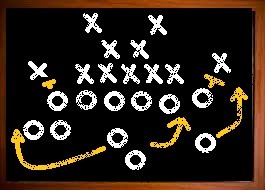
While not specifically technology focused, the article itself challenges whether or not a leader’s specific measurable EQ has an impact on organizational effectiveness or end results. I prefer to think of EQ less as a sole measure and more of a “trait with weight” that is influenced and regulated by other environmental factors. The individual leader’s trait is but a voice (and more importantly an ear) in the cacophony of the environment. Their individual trait interacts with what I will call organizational receptors to determine its ability to successfully impact it or not. Much like an athlete with raw natural talent must practice and engage situationally to hone their craft. It does not matter if the athlete can throw a ball 80 yards with exacting precision, if he cannot do it when his opponents are closing in on him from all sides, he will fail.
When it comes to the combining the concepts of leadership and EQ all of the conversations I have experienced focus too much on the leader as a lone agent. I believe it has more to do with the leaders interaction within their own specific eco-system and their experience in managing the combined tactical and EQ environment of their teams.
Its through this lens that I believe that Leadership EQ begins to matter…and I do think it matters. The caveat is that it matters experientially based upon where in the hierarchy you sit, the function one delivers, and the results expected by the task. Additionally EQ has as many inputs as outputs and together they can become cumulative in ultimately creating or reflecting a set of expectations and results not immediately appreciated in the environment.
Interestingly I have also come to the belief that an individual leader’s EQ becomes less relevant the higher in the hierarchy he or she achieves specifically in organizations that experience “normal” levels of stress or pressure in the system. I would also posit that organizations going through “significant or elevated” levels of stress actually prefer a lack of measureable EQ in the highest levels of leadership which reinforces Kingsland’s ‘Hero’ observations. However, even in those situations, those more localized team leads in an organization must still have those EQ talents if the organization is to deliver successful results.
These are important factors to consider especially when leading an organization through change and selecting and understanding your leadership team and management chain.
What is Emotional Intelligence or EQ Anyway?
The Wikipedia definition of EQ is defined as :
“the ability to monitor one’s own and other people’s emotions, to discriminate between different emotions and label them appropriately and to use emotional information to guide thinking and behavior.[1] Emotional intelligence also reflects abilities to join intelligence, empathy and emotions to enhance thought and understanding of interpersonal dynamics.”
I wont go into the various EQ models or the complexity of the debate by those much smarter than me in this space. My position is more observational and it focuses more on the different environmental representations and reflections in the modern workplace. Its less about an individual and more about the navigation of the leader in a complex interaction of individuals and their work environments.
Its not just about the leader but the landscape of the led
Having observed and participated in some fairly substantial organizational and company level turn-around activity especially in the realm of technology there seems to be a clear set of criteria or perhaps areas of awareness required for success. In my experience where groups have led change the following 10 conditions were present and where results were mixed or failed they were not. Please keep in my that this is solely through the lens of the EQ perspective. There are far more opportunities to fail via poor strategic or tactical decisions. So we must pre-suppose for this chat that the strategy and tactical direction is correct or at least directionally correct.
As mentioned, I believe it is more about the interaction and observation of the leader with an overall EQ ecosystem that is additionally regulated by specific expectations of hierarchy. In short, I have ended up on the following basic tenets of observation in this space:
- EQ can be measured (and in my mind more accurately weighted) for an individual leader. But it is just a small but important part in driving overall organization effectiveness and success. Like the natural athlete has the raw ability, its the application of those skills into real world experiences that matter most.
- EQ is also an organizational environmental variable that is made up from the collective expectations of its individuals and their own personal weights. Those individuals, groups or teams have created a collective set of traits and importance as an organization. In order for a leader to lead to success those collective expectations need to be met. In effect, each ‘organization’ has its own EQ desires and expectations fashioned from the interaction of its members along with their individual requirements.
- An organization can have different EQ personalities at different levels of the hierarchy which also need to be well understood.
- Different strategies will likely need to be applied to each level of the hierarchy of the eco-system for success to be achieved.
- In some cases even the distribution of teams across different geographies can add additional cultural/experiential wrinkles to the problem that must be accommodated into the strategy.
- Any successful leader must be able and willing to “change frequencies” in both their sending of communication and more importantly their reception of it in the eco-system. Depending on the hierarchy and size of the organization a leader may introduce, change, or incent other “receivers” at closer levels in the hierarchy.
- If this is done, it is imperative that those “receivers” have a more direct communication path to the leader.
- EQ matters more at the atomic work level. Close to the execution teams.
- In a turn-around or organizational change situation – the overall strategic or tactical deliverables are paramount. Those are the goals to be achieved. While these can be achieved from a purely intellectual pursuit, it is the ignition via EQ that represents the fuel that will power that change. That fuel has a finite quantity. The leader who ignites the EQ “fuel” with a Poor strategy and direction can cause a change in the EQ characteristics of the environment they are trying to read. Capability Counts. Confidence Counts.
- Be mindful that in my experience different professions can have their own sets of group EQ expectations that may differ from the rest of the organization – Technology organizations versus Human Resource Organizations for example. There can even be slight differentiations introduced by geography or culture. Think Silicon Valley Technology versus Atlanta Internet Company versus East Coast Financial Services Technology cultures. Like different plays in a playbook, the leader must adapt their EQ strategy.
One might argue that this would all feed into the formal definition of a leader’s emotional intelligence. Their ability to read the field as things develop. In some regards that is true, but my supposition is that it is more than just their ability. On one hand there is an ability that is both natural and experiential (to some degree even learnable if not observable) and on the other hand there is an equal force in the environment that they work in that is as dynamic, changing, and alive which represents individual EQ’s and aggregations of EQ from within the organization. Its that delicate dance the defines the ultimate success.
In his post, Ross Kingsland asked “How is it so many people in position of power and leadership achieve this level and maintain it, despite the fact that their emotional intelligence is perceived as low?” His examples focus on Tony Blair, Barrack Obama, and even George W. Bush. In my mind it ultimately boils down to how well they understand, listen, interact, and ultimately manage the EQs of the various organizations and institutions they lead. Its not just about the leader. The organizational EQ pushes back. It interacts. It can and does change. Once higher level needs are met, the needs of the organization become more focused. The leader must continue to dance. It is not a one and done affair.
Ultimately the leader charged with change my deploy their own strategy around the EQ. It tests their ability to read the plays. The teams they put in place and their ability to “fire up” or “ignite” the underlying EQ passions of the organization they lead. If a low EQ leader knows that they have a deficiency they may compensate with hiring or promoting more ‘relate-able’ leaders underneath them. Its a perfectly sound strategy but it takes some awareness of one’s own strengths and weaknesses. All of Ross’ leadership examples had specific programs, plans, and targets – the tactical and strategic goals to achieve. Their ability to execute and inspire had less to do with their own EQ as it did their strategies and interactions with the various elements of the EQ environments they worked within.
The one thing worth mentioning is that a certain EQ Cognitive dissonance occurs when organizations are in a significantly stressed state. The tactical and strategic elements of a leaders plan can over-ride any underlying requirements from the organizational EQ if the entire eco-system itself is under strain. An example would be if the company’s existence has been significantly disrupted or in danger of going out of business. In that case it is highly likely to find people putting their own interests and preferences aside for the short term to save the firm.
In these cases leaders with high intelligence but low emotional intelligence are tolerated and to some degree rallied behind. The example used in the article focused around Winston Churchill during World War Two. During the time of extreme duress the country and its institutions fell into line behind someone with a plan and a way forward. Once the danger had passed, the ‘organization’ eventually rejected him. Just about everyone has an example of someone who led an organization or group to achieve a great feat while presented with overwhelming odds only to ultimately be undone by those same teams once the ‘big trouble’ was eliminated.
In the end, it represents another work track that one has to be mindful of when tasked to bring about change in an organization. For whatever reason my own personal experience has shown this to be particularly important in the Technology areas of a company. When its deployed successfully – you achieve the mission faster, with less resistance, and ultimately with better results. That is not to say you cannot achieve this without it, but its definitely a hard path to execute along. Of course there is always a better than average chance I am full of …silly putty.
Interesting and Related Links
http://rosskingsland.com/emotional-intelligence-myth-leadership/
\Mm
Just like the NASA Stereo-B Probe…
On August 23rd 2016, NASA announced that its DSN (Deep Space Network) had re-established connection with the Stereo-B probe whose joint mission (with its counterpart probe Stereo-A) was to orbit the sun. The purpose of the twin probes managed by the Johns Hopkins University Applied Physics Laboratory in Maryland was to use the two probes to see the entire star. Not just the side facing our planet, but the other side as well. The folks lost communication with the probe, but never gave up. Two years later (just a few days ago in fact) they were able to re-connect to the silent space adventurer and the team is hard at work trying to get things back into working order.
How does that have anything to do with the LooseBolts blog you ask? There are some interesting corollaries to our prodigal space mission and my ramblings here on Loosebolts. The obvious one of course is that its been about two years since my last post. I didn’t time it that way but it is kind of spooky. Similarly just as Stereo-B had its counterpart in the Stereo-A mission, its not like I have been really silent as I have been maintaining a blog internally to my work at First Data. That internal blog has been blasting out all kinds of interesting, pithy, technical, optimistic, critical, business-relevant, and some non-business-relevant posts throughout the entirety of the time.
My internal blog is called Random Thoughts. The dual blog system (one focused internally and the other focused externally) is a mechanism I have used for a very long time throughout my career. Like our twin solar satellites, Random Thoughts has been buzzing away on the far side of the sun accomplishing its half of the mission. Loosebolts however, had to take a backseat until I could get some of my house in order.
To be honest my ‘Random Thoughts’ are not really all that random and are almost exclusively focused primarily on the work at hand inside the firm. In my opinion Communication is the number one factor whether you will have an effective organization. This importance is magnified 1000 times if you are actively engaged in the turn-around of the business. Communication defines expectations. Communication defines concerns. Communication defines Priority and Importance. Communication defines direction. Most importantly – Communications defines culture.
This last bit is incredibly important when engaging in re-inventing a company which essentially defined the first and second generations of an industry. A company that has been in operation almost 40 years and whose next evolution maintains as a basic precept that technology will be a defining factor in its paradigm shift. The target of so many disrupters trying to out disrupt itself and everyone else at the same time. A company that has scale beyond any other in the #Fintech space in terms of reach but one that also has to contend with significant legacy technology decisions.
Communications are in full effect. In addition to the internal blog, I also send out a personal note to the entire technology organization summarizing the work accomplished and challenges discovered each week every Friday. We have even deployed our own internal Global Technology TV Station focused around our execution.
On the Technology side, we have been hard at work doing some incredibly cool things. Things you cannot do without scale to start. Problems, opportunities, and a vantage point really unimaginable for most. Of course it will all be about execution. The execution (both looking ahead and looking behind) is well underway.
While I have personally participated in some very large turn-around’s and technology strategy shifts before – the learnings and challenges here have truly changed my perspective across a number of areas. The strange result of dropping an Internet minded technologist in the middle of Financial Services with the executive support required to make the change. I hope to share many of these with you here again on Loosebolts. We are getting ready for some interesting transitions and revelations.
Communication initiated to Loosebolts blog….
Connection Established.
Sending queued messages….
\Mm
On the Move: First Data
Well after a bit of time in stealth I am finally able to announce that I have taken the position of Chief Technology Officer at First Data.
After being asked to join the Turn-Around team at AOL and driving some amazing results over the past four years, it was time for a change. I absolutely loved my time there and the people were amazing. Success has a quality all on its own and it was an incredibly personally rewarding experience for me to be a part of something that unique.
The move to First Data is an incredibly exciting move for me for many different reasons but one of the key drivers for me is that I feel that this industry is ripe for change. It’s a move for me from running and building large scale Internet products and infrastructure to the Financial Services Industry.
For those of you who may be be unaware of who First Data is, or what they do, its probably easiest to think of it this way – one out of every two credit card or debit card transactions across the world touches our infrastructure at some point in the transaction process. From a transactional scale perspective its very similar to what I have been used to companies likes AOL, Microsoft, and Disney. The difference being of course that these transactions are a little more important than checking your favorite sports scores, or getting your e-mail.
My challenge of course is to drive automation. To build a platform that makes infrastructure a decisive and differentiating platform to launch products and services. To create a learning infrastructure and software eco-system that gets smarter over time. In large part how do you blend the agility of the Internet with the maturity and complexity of the Financial Services Industry. Sure it’s a complex technical problem space, but it has some very interesting business and regulatory challenges as well. In many respects dealing with Safe Harbor, Regulatory and tax has been part of my job for many years. The challenge now is to take that automation to the next level.
To that end I have to say that First Data is assembling an amazingly formidable team to drive this change. I will be reporting to the President of First Data, Guy Chiarello. Guy is a universally respected Technology leader in the Financial Services industry with top posts at Morgan Stanley and JP Morgan Chase. Technology will be key to the success of the company and the leadership team is a unique blend of technology savvy leaders from across the world.
The new adventure begins!
You can follow the link to the official press announcement.
Along with the initial pickup from the Wall Street Journal.
\Mm
Whiffs of Wisdom #6 – Managing People Managing Tough Decisions
I am getting a lot of encouragement to share more of my “Whiffs of Wisdom”. Most are related to Managing Technical People, Technology situations and Managing Managers. All of them have tongue firmly placed in cheek. 🙂 Heres another one that came up recently:
Whiffs of Wisdom #6
On Managing People who Have to Manage Tough Decisions
Never underestimate ones ability to avoid making a tough decision or having a tough conversation. There is a nigh-limitless fountain of creativity in the work created, conference calls had, or meetings to attend – to avoid having a tough conversation. If only you could harness that creativity for good. Vigiliance, personal support, and every once in a while a swift kick in the rear are the only known remedies.
\Mm
Whiffs of Wisdom #18 – Project Managers and Security People
I am not sure why but for some reason this topic has come up for me like 8 times this week. Rather than continue to talk about it I figured I would just post one of my “Whiffs of Wisdom” some people call them “Manosisms”. Apparently I am the worst person in the world at coming up with anecdotes but people get my drift so in my book that means success.
Whiffs of Wisdom #18
On Project Managers and Security People
Every Technology organization needs Project Managers and Security-focused Engineers. There ACTUALLY IS a magic number of these individuals to have in your organization. I don’t know what that number is, but I know when I have one too many of either. These folks bring order to chaos (Engineers are notoriously terrible at project management) but the moment is starts becoming more about the process versus the END RESULTS I know we have gotten off track. There is nothing more effective than a great project manager and nothing more destructive than an overbearing rule-nazi project manager. You need to watch it closely because left to their own well-meaning devices these groups tend to create Bureaus of Business Prevention.
\Mm
 LooseBolts